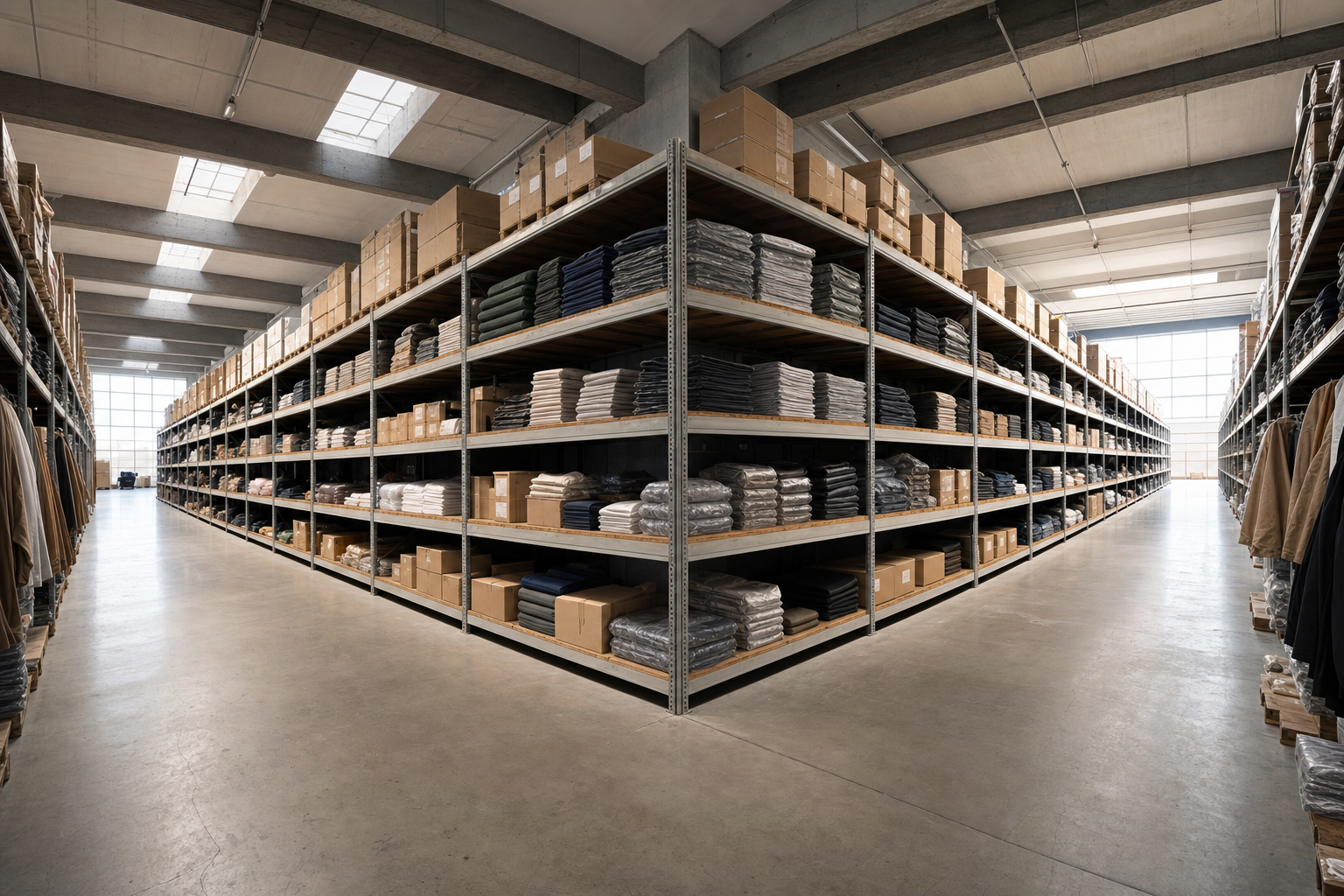
Apparel warehouse management is the receiving, putaway, picking, packing, and shipping discipline that moves inventory accurately from arrival to customer. This category covers WMS design, slotting, barcode scanning, zone versus batch picking, 3PL coordination, and the warehouse execution patterns that hold multi-channel apparel operations together at volume.
Short, specific answers to the questions we hear most often. Click any question to expand.
What is a warehouse management system (WMS)?
A warehouse management system controls the movement of inventory inside a warehouse, receiving, putaway, picking, packing, and shipping. A good WMS uses barcode scanning or RFID for accuracy, assigns optimal picking paths, and feeds inventory and order status back to the ERP or OMS in real time.
Does an apparel brand need a WMS separate from its ERP?
Only if the ERP does not include WMS capabilities. Modern apparel ERPs like Uphance include native WMS. A standalone WMS is typically needed only in very high-volume warehouses or complex multi-3PL setups. For most mid-market apparel brands, a unified ERP + WMS is simpler and more reliable.
What is slotting and why does it matter?
Slotting is the practice of placing SKUs in warehouse locations based on their velocity and relationships. Fast movers go in golden-zone locations close to pack stations; slow movers go higher or deeper in the warehouse. Good slotting reduces pick time by 20 to 40 percent without adding staff.
What is the difference between zone, batch, and wave picking?
Zone picking assigns pickers to specific areas of the warehouse and orders pass through multiple zones. Batch picking groups multiple orders for the same picker to collect in one warehouse trip. Wave picking releases a set of orders to the floor together based on priority and shipping cutoffs. Each has tradeoffs; the right choice depends on order mix and volume.
When should an apparel brand move to a 3PL?
Common triggers are volume outgrowing the current space, wanting geographic coverage in a new market, needing fulfillment expertise (DTC versus wholesale versus international), or wanting to convert fixed warehouse costs to variable. The decision is not binary, many brands operate a mix of their own warehouse plus 3PL partners.
What KPIs should a warehouse track?
Pick accuracy, order accuracy, on-time ship rate, dock-to-stock time (receiving to available-to-sell), units per labor hour, and cycle-count accuracy. Accuracy and speed are the two dimensions; every warehouse KPI feeds one of them. Good warehouses publish these KPIs internally and act on the trend, not just the snapshot.



 Warehouse