Apparel Warehouse Optimization: What SKU Complexity and Peak Seasons Actually Cost
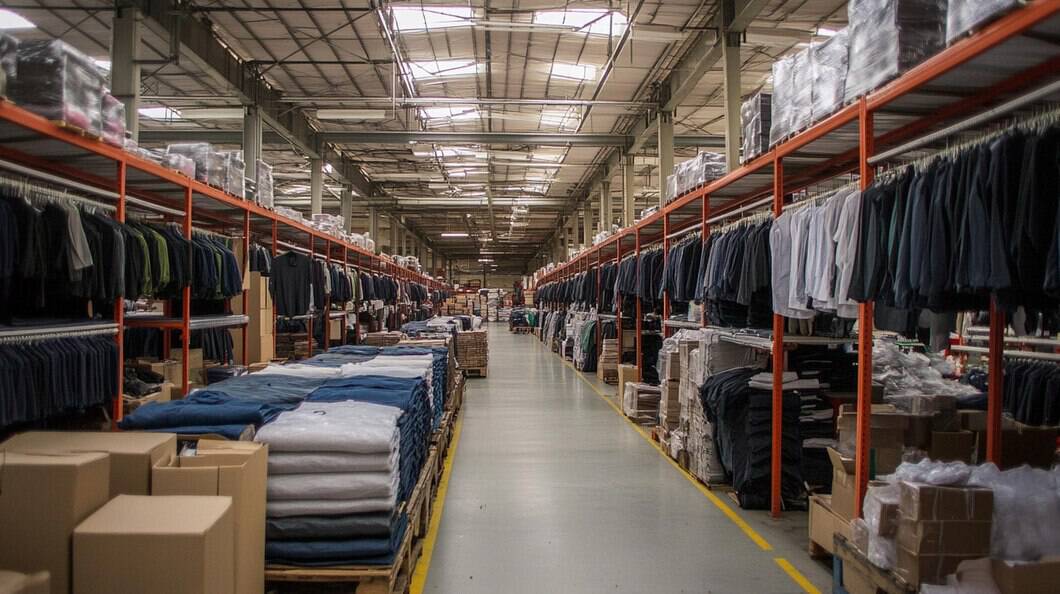
From the go-lives I have run this year, the pattern is consistent: the brands that struggle most in their warehouse are not understaffed and not under-automated. They are working from an inventory count that is wrong, and every other problem flows from that. Pick errors, missed ship windows, stockouts on confirmed orders, returns that pile up for weeks because nobody knows what to do with them. All of it traces back to one number being wrong.
Apparel warehouse optimization is the process of improving inventory accuracy, layout, pick execution, labor allocation, and returns handling inside a clothing warehouse. The operational stakes are higher in apparel than in most other categories: a 200-style catalog multiplies into thousands of active SKUs, seasonal demand spikes are predictable but still break operations calibrated for average throughput, and returns arrive in bulk and need to reenter inventory quickly or they distort every allocation downstream.
What makes apparel warehousing structurally harder than most categories?
Three things make clothing warehouses harder to run than a general merchandise operation.
First, SKU proliferation. A single apparel style typically runs across 5 to 8 sizes and 2 to 4 colorways, producing 10 to 32 individual SKUs from one design. A brand with 200 active styles may hold 3,000 or more active SKUs at any time. Similar-looking items (the same shirt in medium versus large, or navy versus black in poor lighting) are adjacent in storage and easy to mispick. Adding seasonal carryover multiplies the count further.
Second, seasonal demand variation. Apparel demand does not distribute evenly across a year. Holiday, back-to-school, and product drop periods can generate 3 to 5 times normal order volume in a short window. A warehouse optimized for average throughput fails at both ends of the cycle: it cannot absorb the peak without building in buffers (extra staff, extra carriers, manual QC layers) that erode the margin advantage of the period, and it carries excess inventory and cost during the trough.
Third, returns volume. Ecommerce apparel return rates commonly run between 20 and 40 percent of units shipped. Each return that arrives at the warehouse is an inventory transaction: the item needs to be inspected, graded, and restocked or written off. Returns that sit in a processing queue represent inventory that the system believes is on-hand but is not available to sell. When returns processing takes days or weeks instead of hours, the live count drifts from physical reality, and oversells on subsequent orders follow.
Where does warehouse execution break in the 6 Breakpoints framework?
Breakpoint 5 in the 6 Breakpoints framework is when warehouse execution gets less predictable: receiving, putaway, pick, pack, ship, and returns suffer. This is the first breakpoint that warehouse staff feel directly, and the feedback loop it creates runs upstream.
When the warehouse cannot produce accurate ship confirmations, inventory counts in the operations system drift from physical reality (Breakpoint 3, inventory truth). When inventory truth is weak, the order management layer makes allocation decisions based on numbers that are wrong (Breakpoint 4, order flow). When order flow breaks, sales teams oversell, retailers chargeback, and the finance team spends significant time at month-end reconciling what actually shipped against what the system recorded (Breakpoint 6, reporting).
This feedback loop is the reason fixing “just the warehouse” rarely works. The warehouse is a point of failure, but the system around it sets the conditions for success or failure. A warehouse team working from accurate pick tickets, reflecting real-time inventory that was correctly allocated at order entry, makes very few errors. The same warehouse team working from pick tickets generated by a system that has not reconciled inventory since last night’s batch run will generate errors regardless of how well they execute.
For a $15M brand running wholesale plus DTC plus a 3PL, the back-of-envelope cost of this drift is 6 to 9 hours per week in inventory reconciliation, a 2 to 3 percent oversell rate at peak, and roughly one full-time equivalent doing data plumbing between systems that should be connected.
How does warehouse layout affect pick efficiency in apparel operations?
Layout decisions in a clothing warehouse should be driven by pick velocity, not product category. The instinct is to organize by brand or by style family, which is logical for receiving but counterproductive for picking.
Fast-moving SKUs belong in primary pick positions: fixed locations as close to the packing station as possible, at a height that does not require a picker to crouch or use a stepladder. In apparel, “fast moving” typically means the top 20 percent of SKUs that make up 60 to 80 percent of order volume. For a brand with frequent product drops, this group changes by season and sometimes by week; the layout needs to account for periodic position resets as the velocity profile shifts.
Organize by size run within a style, not by colorway. A wholesale PO for a six-pack of one style needs units across multiple sizes. If sizes are stored in different zones by color, the picker walks the entire warehouse for one order. If sizes are stored together by style in one zone, the picker completes the order in one pass.
Vertical storage extends capacity without extending footprint. Seasonal inventory that arrives in volume before peak can go to upper rack positions in bulk, with forward picks staged at ground level based on projected demand for the week. Overflow stock sitting at floor level throughout a picking zone slows every picker who works that zone all season.
Receiving and returns should not share the same door or the same processing area as outbound shipping. When returns processing and outbound fulfillment share physical space, returns create congestion during peak outbound periods, and outbound labor gets pulled into returns processing when the queue backs up.
What does scan-based pick execution actually change?
Barcode scanning at pick is the single highest-return improvement most clothing warehouses can make. It removes the highest-error step in the fulfillment workflow: a picker selecting an item based on visual identification of a label or bin location without any system confirmation.
In practice, scan-at-pick works as follows. The picker receives a pick list, either on a handheld device or a printed sheet. For each line, the picker scans the barcode on the item picked before placing it in the tote or carton. The system verifies that the scan matches the expected SKU for that line. If it does not match (wrong size, wrong colorway, wrong style entirely), the device flags the error before the item leaves the zone.
This single step eliminates the most common class of wholesale chargeback: wrong units in a carton. It also eliminates the scenario where a retailer’s receiving team rejects a carton because the contents do not match the ASN.
RFID extends this to bulk receiving and cycle counting. RFID readers can count hundreds of items simultaneously without individual scans, which makes receiving large purchase orders faster and makes periodic cycle counts practical without shutting down operations for a full physical inventory.
Most brands in the $5M to $100M range should start with scan-at-pick before investing in RFID or automated storage. The error reduction from scanning is immediate and does not require infrastructure investment beyond handheld devices and a WMS that can process the verification.
How should an apparel warehouse handle seasonal demand spikes?
The goal is to design operations that can absorb a 3x to 5x volume spike without proportionally increasing error rates or costs. That requires building the capacity ceiling into the system, not just into staffing.
Staffing for peak is unavoidable, but temporary staff introduce their own risk. A seasonal hire on day three does not know which zone holds which styles, which bin contains the correct size run, or what to do with a discrepancy. When the warehouse layout, pick routing, and scan-at-pick verification do the work that product knowledge would otherwise do, a temporary hire can be productive much faster and with a lower error rate.
Carrier scheduling is the other bottleneck. LTL carriers book receiving appointments, and the carrier’s capacity during peak periods is finite. Brands that build carrier relationships in advance and use their OMS to project shipment volumes by day can pre-book capacity. Brands that wait until the orders are ready to ship compete for spots on carriers that are already full.
For product drops specifically, the pre-pick strategy makes a meaningful difference. When orders are placed in advance through a B2B portal or pre-order mechanism, pick tickets can be generated and inventory staged before the drop date. On drop day, the warehouse executes against pre-staged picks rather than generating them in real time against a sudden inbound order surge.
What does returns processing need to look like to protect inventory accuracy?
Returns that enter the building and sit in a queue represent inventory that the system counts as on-hand but the warehouse cannot ship. When a DTC return stays in a receiving queue for five days before inspection, and the operations system reflects that item as available to sell, the next customer who orders it will be oversold.
The standard for returns processing in an optimized apparel warehouse is to inspect, grade, and restock (or quarantine) within the same business day the item is received. That requires a defined returns receiving workflow: a dedicated returns station, a clear decision tree for grade (resalable, requires reprocessing, write-off), and a system that accepts the return transaction immediately rather than batching it.
Returns that need reprocessing (steaming, rebagging, refolding) should move to a processing queue with a time target, not into general storage where they are invisible to the pick team.
For wholesale returns, the process is more complex because it involves reconciling a bulk return against the original PO and resolving any discrepancies before the credit posts. The receiving team needs the original PO accessible to verify quantities and conditions against the buyer’s return authorization. When this is a manual lookup, it takes days. When the return flows through the same OMS that holds the original PO, the reconciliation is the same-day.
What this means for an apparel operations team
Warehouse optimization in apparel is not primarily a capital problem. The brands that run the tightest operations are not necessarily the ones with the most automation. They are the ones with the most accurate inventory counts, the clearest pick paths, and the most direct connection between order management and warehouse execution.
Magnolia Pearl, known for frequent drops and same-day fulfillment at scale, cut reconciliation time by roughly two-thirds and held their oversell rate under 0.5 percent through peak after consolidating their operations into a connected system. The change was not a new automated sorting system. It was connecting the warehouse layer to the same inventory record the order management layer was reading, so the pick team was never working from numbers that were already wrong.
Lufema, running multi-entity wholesale across a large catalog, reached 99 percent inventory accuracy (up from 90 to 95 percent before the change) and reduced excess stock by about 20 percent. The inventory accuracy gain came from eliminating the reconciliation lag between their warehouse transactions and their operations system.
The warehouse management layer is where the 6 Breakpoints feedback loop either holds or breaks. An accurate warehouse that confirms receipts and ship events in real time keeps inventory truth intact upstream. A warehouse running on batch updates and manual confirmations introduces drift that the entire operation downstream has to compensate for.
The assessment question is not whether to invest in the warehouse. It is whether the warehouse is connected to the system that tells it what to pick, in what quantity, against what allocation. If those two layers are not sharing one record, the warehouse team is always working harder than the work requires.
Frequently asked questions
Where this fits in the Uphance platform
Ronnell writes about onboarding, adoption, and operational readiness for apparel brands moving to a connected platform. His articles focus on what it takes to go live with confidence and sustain strong execution across channels, warehouses, and teams. As Head of Customer Success and Onboarding at Uphance, he leads the implementation phases that turn a software signature into running operations. He writes about kickoff scoping, data migration, sandbox cutover, change management patterns, and the stakeholder alignment work that determines whether a connected platform actually changes how a brand runs, or just adds another login to the existing chaos.
Ruchit writes about product strategy for apparel operations, covering how mid-market fashion brands use connected workflows to manage product development, inventory, orders, warehouse execution, and reporting. As Head of Product at Uphance, he shapes the roadmap that ties PLM, PIM, BOM management, allocation, fulfillment, and warehouse operations into one system. His articles dig into apparel-specific operational mechanics: tech packs, spec sheets, putaway, pick-pack, landed cost, and the data plumbing that makes inventory truth possible across multiple channels and locations. He focuses on the workflow-level questions that separate generic ERPs from systems built for how apparel brands actually run.