Activewear fabric consolidation playbook: cutting SKU sprawl before the next season

When fabric consolidation is run after the line plan is approved, it fails in a predictable way. Merchandising has already committed to a 48-style range built on 14 base knits, development starts hunting for substitutions mid-sampling, and the mill quotes a surcharge because the consolidated minimum arrived six weeks after their booking window closed. The range ships late, with the original 14 fabrics, and the consolidation deck becomes a post-mortem.
What does activewear fabric consolidation mean, and why does sequence matter?
Activewear fabric consolidation is the deliberate reduction of the base fabric and trim library a seasonal range draws from, so that one qualified cloth carries more styles. A typical mid-market activewear brand will carry 10 to 18 performance knits across a season: a double-knit, two single jerseys at different weights, a rib, a mesh, a brushed back, a ponte, a few prints on the same base. Consolidation asks whether the double-knit and the ponte can be the same cloth at two weights, whether the mesh and the rib share a yarn, whether the brushed back is really earning its minimum.
The work is boring and the payoff is large: fewer POs, fewer lab dips, fewer short-shipment risks, and a product data spine that development, production, and planning can agree on. The data spine is the payoff that lasts. Fabric sprawl is a BP1 symptom (product data fragmenting at the source), and until the fabric library is clean, every downstream decision inherits the noise.
Each stage below depends on an input the previous stage produces. Skip a stage and the next one runs on assumptions. Across the vendor conversations I sit in on, brands that treat consolidation as a line-planning input finish the season with a tighter library and no range gaps. The ones that treat it as a cost-reduction exercise after sampling end up negotiating with their own development team instead of their mills.
Stage 1: audit the current library against actual style usage
Owner: product development lead. Input: last two seasons of tech packs, bulk fabric POs, and style sell-through by fabric. Done when: every active fabric in the library has a count of styles using it, total meters consumed, and sell-through of the styles it carried.
Most teams want to skip this stage because the data lives in three places: tech packs in the PLM or in shared drives, POs in the ERP or in a spreadsheet, sell-through in retail reporting. Pulling it into one view is the point. You are looking for the fabrics that carried one or two styles, consumed under a minimum, and sold through below the range average. Those are the first consolidation candidates. You are also looking for the opposite: the workhorse fabric carrying 11 styles that nobody flagged as strategic.
A product data scorecard run against the current library will usually surface the audit shape in a day. The scorecard asks the questions the audit needs to answer: how many fabrics have one owner, how many have complete test data, how many are duplicated under different codes.
Stage 2: define the target library before merchandising sees it
Owner: head of product, with development lead. Input: audit output, performance requirements by category, mill capability map. Done when: a target library of 6 to 10 base cloths exists with written performance claims (weight, stretch, recovery, moisture, abrasion) and a named qualified mill for each.
The mistake here is building the target library in a merchandising meeting. Merchandising will protect fabrics because they are attached to hero styles, and the conversation becomes political before it becomes technical. Development builds the target library first, defends it against the category performance requirements, and only then brings it to merchandising as a constraint.
Written performance claims are what make the library defensible later. When a designer asks for a 14th cloth in week six of development, the answer is not “we are trying to consolidate”; it is “the double-knit at 280 gsm meets the stretch and recovery spec you are asking for, here is the test report.”
Stage 3: run the consolidation against the proposed line plan
Owner: merchandising lead, with development. Input: target library, proposed style count by category, drop calendar. Done when: every proposed style is mapped to a fabric in the target library, with no more than two styles per fabric per drop flagged as substitution candidates.
Stage 3 is where the work becomes real. Merchandising brings the proposed range, development overlays the target library, and the gaps surface immediately. A legging and a bike short on the same double-knit at the same weight is fine. Six leggings on the same cloth in the same drop is a cannibalisation risk and a fabric-level inventory risk at once (BP3 territory, but it starts here).
The check covers exposure as well as coverage. If one cloth is carrying 40 percent of the range by unit, the mill relationship and the test regime for that cloth both need to be stronger than they were when the cloth carried 12 percent. Consolidation concentrates risk onto fewer cloths.
Line planning inside the PLM makes this stage efficient, because the fabric-to-style map lives next to the critical path and the designer sees the constraint while they are building the flat, not after.
Stage 4: lock the library and freeze lab dips to the consolidated set
Owner: development lead. Input: approved line plan with fabric assignments. Done when: lab-dip submissions are issued only against fabrics in the target library, and any request for a non-library fabric requires written sign-off from the head of product.
Stage 4 is a process control, not a tooling change, and it unravels fastest. A designer finds a cloth at a trade show, a sales lead promises a key account a bespoke base, a sampling room runs a dip on an off-library fabric because the on-library one is backordered. Each exception is defensible on its own and lethal in aggregate. The written sign-off is friction on purpose. If three exceptions get approved for a season, the library is still working. If 11 do, the consolidation is over.
Stage 5: align bulk POs and minimums to the consolidated library
Owner: production and sourcing lead. Input: locked library, forecast by style, mill lead times. Done when: bulk POs are issued against aggregated fabric demand (not per-style), with a single minimum per cloth per colourway rather than a minimum per style.
Stage 5 is where the consolidation pays for itself in cash. Take a hypothetical library of 14 cloths across 48 styles, and assume it leaves POs under minimum on four or five cloths every season. On the same assumptions, cut it to eight cloths across the same 48 styles and demand aggregates enough that minimums are met with a buffer, and the buffer lands as safety stock the planner can use.
Aggregation depends on the production and sourcing operating model: it only works if the PO system knows that style A and style B draw from the same fabric booking. If they are tracked as separate fabric lines in a spreadsheet, the aggregation lives in someone’s head and breaks the first time that person is on holiday.
Stage 6: measure the consolidation against the next-season audit
Owner: product development lead. Input: season-end tech packs, bulk POs, sell-through, lab-dip count, substitution exception log. Done when: a written comparison exists between the pre-consolidation library and the post-consolidation library on fabric count, PO count, lab-dip count, exception count, and sell-through by fabric.
Teams skip this stage most often, and the omission costs them the next season. Without a measured outcome, consolidation becomes a thing the brand did once in SS26 and talks about having done. The library drifts back up over the next three seasons because each individual addition is defensible and nobody is tracking the aggregate.
An operation carrying 2,000 SKUs across wholesale, DTC, and a 3PL without this measurement discipline will burn roughly one full-time equivalent on data plumbing between PLM, ERP, and planning spreadsheets instead of on actual range analysis. That person is usually the development lead’s second-best hire, and they are doing reconciliation work because the systems did not agree in the first place. Fabric consolidation measured properly is one of the few things that gives that time back.
The stage brands skip, and what it costs
Stage 6 disappears. Stage 1 feels productive because it produces a spreadsheet. Stages 2 through 5 feel productive because they produce decisions. Stage 6 feels like homework, and it ships after the next season has already started, when nobody has time for it.
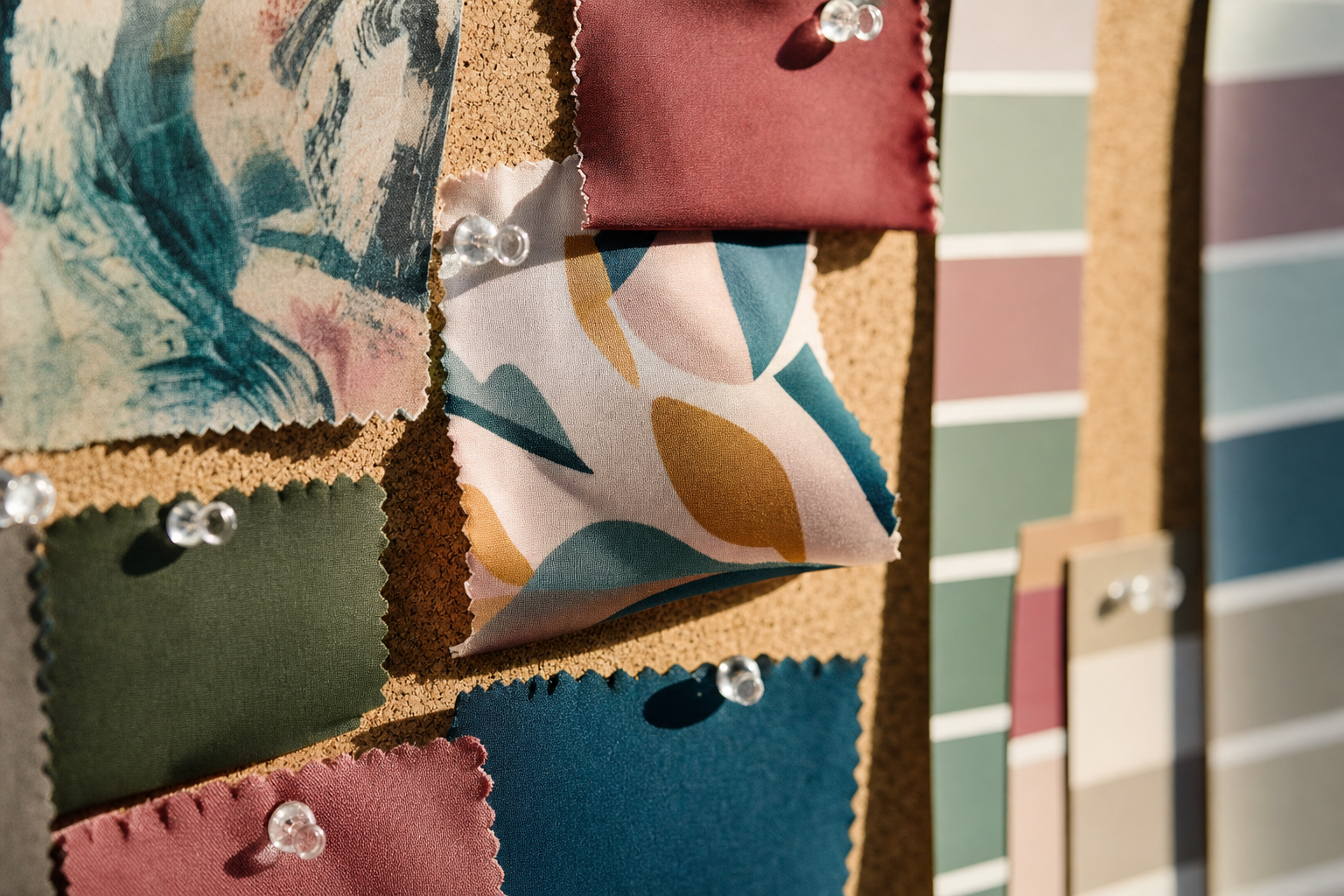
The cost is quiet and compounds. Without a post-season measurement, the next line plan is built against the old library because the consolidated one was never formally adopted into the PLM master. Designers draw from what they see, and what they see is whatever is in the swatch wall. Three seasons later the library is back to 14 cloths, the consolidation deck is in a folder nobody opens, and the next head of product runs the exercise again from scratch. The work is not hard. The discipline to finish it is.
FAQ
Where is your operation on the 6 Breakpoints curve?
The assessment scores your apparel operation across all six breakpoints (product data, production, inventory truth, order flow, warehouse execution, reporting) and identifies which one is hurting you most.
Frequently asked questions
Where this fits in the Uphance platform
Shubham writes about evaluating ERP fit, assessing operational complexity, and how apparel brands can tell whether their current systems are helping or holding them back. As a Solutions Consultant at Uphance, he runs discovery conversations and fit assessments for apparel brands moving off patchwork stacks of PLM, PIM, inventory, and B2B tools. His articles cover ERP selection, vendor RFPs, comparison frameworks, and the operational signals that tell a brand it has outgrown spreadsheets and point solutions. He focuses on how mid-market apparel teams evaluate connected platforms against the cost of staying with what they have.
Venkat is the Founder and CEO of Uphance and the author of the 6 Breakpoints of Apparel Operations framework. He writes about operational clarity for apparel brands as complexity grows across channels, warehouses, partners, and teams. His work focuses on why disconnected operations, not growth itself, create the chaos most mid-market brands feel between $5M and $100M in revenue, and on the operating-model patterns that decide whether scaling a brand strengthens execution or fractures it. He argues that the status quo is the real competitor in apparel software, and that the right move is fewer systems with deeper connection, not more dashboards.