Run tech packs, BOMs, factory POs, landed costs, and incoming-stock dates as one operational ledger. When production drifts, every other breakpoint compounds, inventory becomes unreliable, orders cannot commit, warehouse execution stutters.
Book a tailored demo



Production complexity hits apparel brands earlier than most other operational pressures. As soon as a brand runs more than two factories, multiple seasons in flight, or any meaningful made-to-order share, the operational center of gravity shifts upstream: tech packs vs production specs, cut orders vs BOMs, ETA from factory vs landed-cost expectation, incoming-stock confidence vs sales commitment. None of these are channel problems, they are upstream operational problems that decide what every channel can sell.
Uphance handles production and sourcing as a first-class operating model: a connected PLM where tech packs and BOMs are the source of truth, production orders and POs that match the BOM without side adjustments, factory updates that flow into systems instead of email threads, landed-cost calculations locked at PO time rather than reconciled at month-end, and incoming-stock dates reliable enough that wholesale ship windows and DTC launch dates can be committed against them.
The rest of this page covers the specific workflows production-led apparel brands run, and how production accuracy connects to inventory truth, order flow, warehouse execution, and finance reporting downstream.
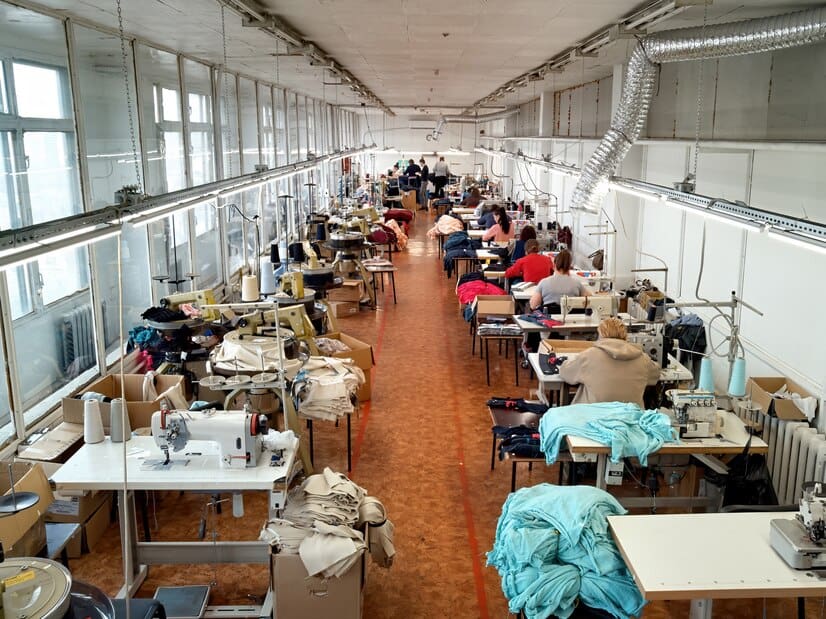
When production slips, the cost compounds: working capital tied up in late stock, expedite freight to recover the schedule, markdowns on goods arriving past the launch window, lost wholesale ship dates, and an inventory picture downstream teams cannot trust. Mid-market apparel brands typically run 1.5 to 3 percent of revenue tied up in slippage and another 0.5 to 2 percent in expedite plus markdown tax, drag that gets bigger every season unless the operational system holds.
Design, production, finance, and ops all work from the same component list and price record. No version-control debate when the factory cuts a different spec.
Factory updates land in the system, not in email. A new production coordinator going on PTO does not stall production visibility.
Duty, freight, broker, and per-unit landed cost are on the record when the PO closes. Margin reporting is predictive, not retroactive.
Manage product development, tech packs, BOMs, and approvals with operational visibility.
Coordinate cut orders, production orders, factory ETAs, and quality status as one workflow.
Issue POs against BOMs with landed-cost calculation, payment terms, and exchange-rate handling built in.
Tie incoming-stock confidence directly into available-to-sell so downstream teams can commit against real dates.
How this runs daily
Tech pack through stock release on one ledger. Factory updates land in the system, not in email, and the system tells the rest of the operation when stock is real.
Where this sits in the 6 Breakpoints framework
The 6 Breakpoints framework maps where apparel operations break as complexity grows. Production-led brands typically feel the strain at BP02, Production and supply execution drift from the plan, with secondary pressure at BP01, Product data fragmentation (BOM accuracy, tech-pack truth) and BP03, Inventory truth (incoming-stock confidence). Fixing production execution removes the upstream cause of the inventory and order-flow problems most brands try to solve at the wrong layer.
Customer signal
Tech packs, BOMs, factory POs, and incoming-stock dates run on one ledger. The production team plans the next drop while the warehouse is shipping the current one, without the spreadsheet rebuild that used to consume the first week of every season.
Most production-led brands also run
A production-and-sourcing operating model usually shows up alongside one or two channel models and a finance lens. Most Uphance customers running production complexity also need:
Production accuracy decides what wholesale ship dates can hold. Pre-book and allocation depend on incoming-stock confidence.
Incoming stock has to land somewhere. Coordination between factory ETA and warehouse receiving is one workflow, not two.
Landed cost feeds margin reporting. Production drift is a finance event before it is a sales event.
See how Uphance connects tech packs, BOMs, factory POs, landed costs, and incoming-stock dates for production-led apparel brands.
Book a tailored demo