Coordinate inventory, production-driven availability, internal warehouses, and 3PL execution in one connected apparel ERP platform.
Book a tailored demo


The best way to manage multiple warehouses in an apparel business is to run stock, transfers, and fulfilment through one connected system rather than a separate WMS, spreadsheets, and 3PL portals. Uphance keeps every location, owned warehouses, 3PL partners, and transit inventory, in a single inventory pool that wholesale allocation, DTC availability, and reporting all draw from.
That eliminates the reconciliation gap where a unit shows as available in one system and committed in another, the most common source of oversells for apparel brands running wholesale and DTC through owned warehouses plus a 3PL.
As brands add warehouse locations and logistics partners, small visibility gaps turn into expensive problems. Transfers get delayed. Inventory confidence drops. Partner handoffs weaken. Customer commitments become harder to manage. The issue is not just fulfillment. It is the lack of one connected system across production, inventory, and execution.
Uphance helps apparel brands manage multi-warehouse and 3PL operations with better visibility and control, without building a patchwork of disconnected tools.
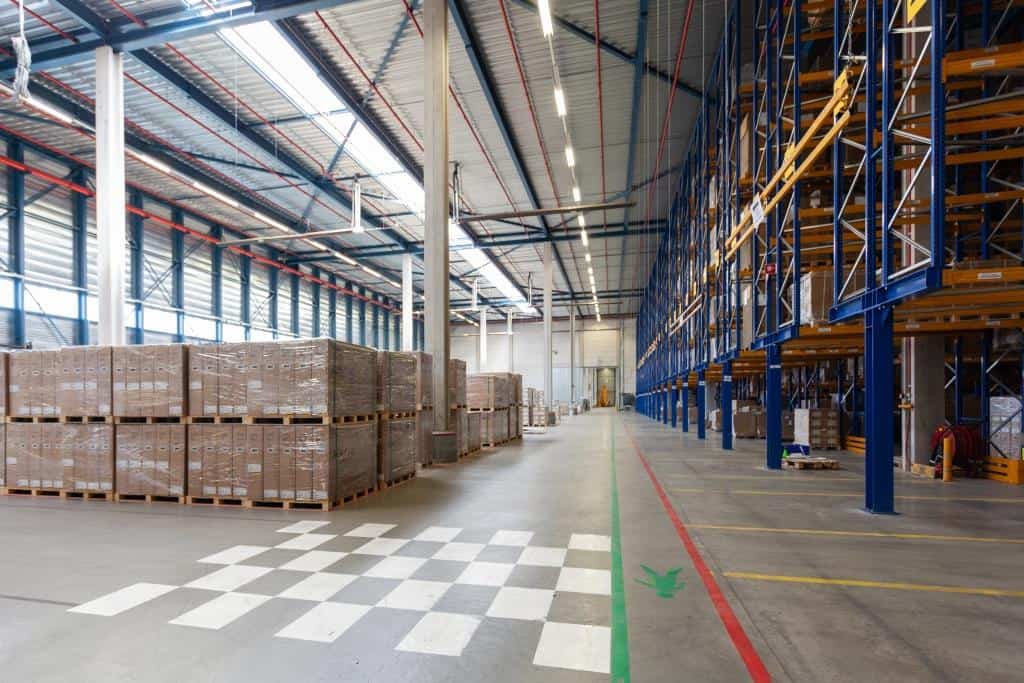
When warehouses and 3PLs operate outside the core system, teams lose clarity on what is inbound, what is available, where inventory sits, and how execution is tracking. That slows response time and adds avoidable friction across operations.
Improve operational coordination by connecting what is being produced to what warehouses and partners should expect next.
Keep internal teams and external partners working from the same operational context.
Reduce blind spots without forcing the business to rely on disconnected systems and manual updates.
As complexity grows, Uphance gives your team the structure, visibility, and control to keep moving without losing accuracy.
Help operations plan around what is coming into the network.
Keep stock visibility cleaner across locations and workflows.
Support day-to-day execution with a stronger operational foundation.
Give leadership better visibility across warehouse and partner performance.
How this runs daily
Inbound through return, across owned warehouses and 3PLs, on one inventory ledger. Transfers stay visible while in-transit.
Where this sits in the 6 Breakpoints framework
The 6 Breakpoints framework maps where apparel operations break as complexity grows. Distributed-fulfillment brands feel the strain at BP05, Warehouse execution gets less predictable (peak resilience, multi-location coordination, 3PL handoffs) and BP03, Inventory truth gets weaker (location-level confidence, transfer-in-flight visibility, 3PL data integration). These two breakpoints reinforce each other: warehouse misses corrupt inventory truth, and inventory misses corrupt warehouse plans.
Customer signal
Multi-warehouse and 3PL inventory holds across DTC drops and wholesale ship windows. Reconciliation time across Shopify, the 3PL, and wholesale was cut by roughly two-thirds.
Multi-warehouse + 3PL is rarely the whole story
A multi-warehouse and 3PL operating model usually sits between channels (wholesale, DTC, marketplaces) above and production below. Most Uphance customers running distributed fulfillment also need:
Wholesale POs need accurate fulfillment promises. Multi-warehouse drives ship-window confidence.
DTC at scale lives on a multi-warehouse footprint. Inventory truth has to hold across all of them.
Incoming stock has to land somewhere. Factory ETA and warehouse receiving are one workflow.
See how Uphance connects production, inventory, warehouse execution, and reporting across internal facilities and external partners.
Book a tailored demo