
Domestic vs overseas sampling: a decision framework for growing apparel brands
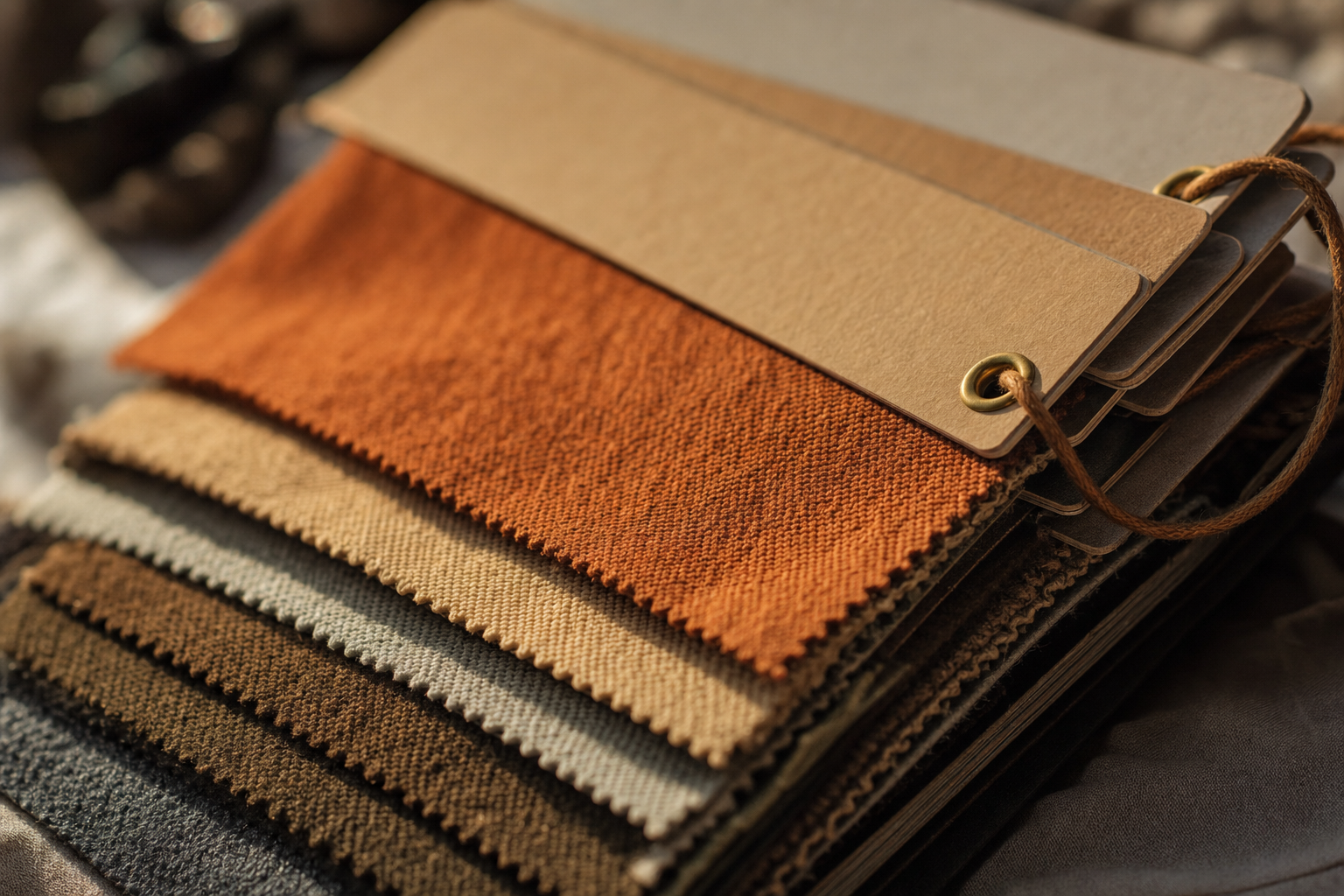
Every development season, a product team sits with a line sheet and decides, style by style, where to sample. The debate usually opens on cost per sample. It should open on how many rounds the style will need. If a jacket is going to burn through four fit iterations before the pattern locks, every week of shipping and customs between rounds is a week the delivery date slips. If the style is a reorder with a minor fabric change, the calendar risk disappears and the production factory should make the sample.
I will lay out the two options, the criteria that decide between them, and which operation each one fits. The reason the 6 Breakpoints framework puts production drift at BP2 is that most teams discover these decisions were wrong only after the first PO ships late. By then the sampling choice is sunk cost and the delivery window is the problem.
What does domestic vs overseas sampling mean for an apparel brand?
Domestic sampling means your protos, fit samples, and sometimes salesman samples (SMS) are made in a local sample room or small-batch factory in your home market, separate from the overseas production factory that will cut the bulk order. Overseas sampling means the production factory itself makes every round, from first proto through top-of-production (TOP) sample, and ships each round back to you for review.
The mid-market reality is that most $5M to $100M apparel brands do both, on different styles, in the same season. The question is not which model to adopt company-wide. It is which model each style belongs in, and whether your product development and tech pack workflow can hold both tracks without losing the thread.
Why iteration count is the deciding criterion
Sample cost per unit is the number everyone argues about, and it rarely decides the outcome. A domestic proto might run three to four times the cost of an overseas proto. If the style needs one round, overseas wins on cost and the calendar impact is small. If the style needs four rounds, overseas can add eight to twelve weeks of courier and customs time across the development cycle, and that time comes directly out of your selling window.
Iteration count is a function of three things: how new the block is, how technical the construction is, and how settled the fabric is. A new outerwear block in a performance fabric your factory has not worked with before is a four-round style. A basic tee in a jersey the factory runs every week is a one-round style. Estimate iteration count before sampling starts, because that estimate is where the two paths split.
Product data discipline earns its keep at this step. If your tech packs, fit history, and fabric approvals live in disconnected files, the designer and the production manager will estimate iteration count differently, and the sampling decision will get made on vibes. A connected PLM with bidirectional Illustrator sync and a critical path calendar turns the iteration estimate into a number both roles share.
The criteria that should decide, in order
Iteration count expected
One or two rounds: overseas. Three or more: domestic for the fit rounds, overseas for the final SMS and TOP. Round count is the primary criterion, and it overrules the others more often than teams admit.
Fabric availability
If the production fabric is only warehoused at the overseas mill, domestic sampling needs air-freighted yardage for every round. That cost and that lead time can eat the calendar advantage. If the fabric is a standard the domestic sample room already stocks or can source locally in a close substitute, domestic sampling runs clean.
Construction complexity
Some construction techniques, bonded seams, specific welding, particular wash treatments, only exist at the production factory. A domestic sample room cannot replicate them, which means a domestic fit sample tells you about fit but not about how the real garment will behave. For those styles, overseas sampling at the production factory is the only honest answer, and you plan the calendar around it.
Who signs off on the sample
If your buyers or your wholesale accounts need to physically handle SMS before writing orders, you need SMS in-hand by a specific market date. Overseas SMS that gets stuck in customs for ten days is a missed market. Domestic SMS production, even at higher per-unit cost, is often the only way to hit the sell-in window.
Minimum order quantities on sampling yardage
Overseas factories often require minimum fabric commitments to open a sample. Domestic sample rooms work in yards, not rolls. For an early-stage style where you are not yet sure you want to produce it, that difference decides whether the sample happens at all.
Domestic vs overseas sampling: side-by-side
| Attribute | Domestic sampling | Overseas sampling (at production factory) |
|---|---|---|
| Cost per sample | Higher, often 3 to 5x | Lower, built into factory relationship |
| Round turnaround | 5 to 10 days | 3 to 6 weeks including shipping and customs |
| Fabric match to bulk | Substitute or air-freighted | Exact bulk fabric |
| Construction match to bulk | Approximate on complex builds | Exact |
| Minimum fabric commitment | Yards | Often full roll or more |
| Best for | Fit rounds on new blocks, technical styles with 3+ iterations, late-add SMS | Reorders, minor variations, settled blocks, TOP samples, styles with 1 to 2 rounds |
| Hidden cost | Pattern drift between domestic sample room and production factory | Calendar slippage across customs on every round |
The hidden cost row is where most teams get hurt. Domestic fit samples that look perfect in your office can come back from the production factory in bulk with the shoulder sitting half an inch different, because the overseas pattern maker interpreted the tech pack differently from the domestic one. The answer is a confirmation sample at the production factory after domestic fit is approved, treated as the real sign-off.
When is the sampling choice a tech pack problem?
I started Uphance because the pattern I kept seeing at mid-market apparel brands was the same operational mess dressed up as a cost debate. Sampling arguments between design, production, and sourcing usually trace back to tech packs that different stakeholders are reading differently, fit history that lives in one designer’s email, and a critical path that nobody is enforcing. The sampling decision gets blamed when the real production drift started at the tech pack.
Once the tech pack, the fit history, the fabric approvals, and the time-and-action calendar sit in one system that both the domestic sample room and the overseas factory read from, the sampling decision gets easier because iteration count is predictable and construction notes do not get re-interpreted at every handoff. For a brand running wholesale and DTC together, roughly one full-time equivalent of someone’s week ends up doing data plumbing between systems. A meaningful share of that plumbing is the back-and-forth that bad sampling decisions and inconsistent tech pack information create.
If your design team and your production team are arguing about which sampling model is cheaper, neither team has a shared view of iteration count, fabric readiness, or calendar impact, and the argument is a proxy for that gap.
Protos, SMS, and TOP: not all samples deserve the same answer
Treating sampling as one decision is where good teams make bad calls. The three sample types have different jobs and belong in different places.
Protos exist to validate the pattern and the design intent. Domestic is usually right here because iteration speed outweighs fabric exactness at the proto stage, and the sample room can turn a round in a week.
SMS exist to sell the line. Fabric and color need to be close to bulk because buyers are writing orders off what they handle. If the market date is tight, domestic SMS production off approved bulk-fabric swatches is often the only path. If the calendar allows, overseas SMS from the production factory is more honest about what buyers will receive.
TOP samples exist to confirm that bulk production matches the approved spec. They have to come from the production factory. There is no domestic option. The question is only whether the TOP sample is reviewed in time to catch problems before the full PO ships, which is a critical path question, not a sampling model question.
A brand running a mixed program (domestic protos, overseas SMS and TOP) is matching each sample type to the job that sample has to do.
Choosing between them
Choose domestic sampling when the style is a new block, when iteration count is expected to be three or more, when the buyer sign-off date is tight, when the fabric is accessible domestically or in close substitute, and when the construction can be honestly represented outside the production factory. Choose overseas sampling when the style is a reorder or minor variation, when iteration count is one or two, when the construction depends on the production factory’s specific capabilities, when the fabric only exists at the overseas mill, and when the calendar has room for shipping and customs on each round. For most mid-market apparel brands, the right answer across a season is both, assigned style by style, with the critical path calendar enforcing the handoffs.
Where is your operation on the 6 Breakpoints curve?
The assessment scores your apparel operation across all six breakpoints (product data, production, inventory truth, order flow, warehouse execution, reporting) and identifies which one is hurting you most.
Frequently asked questions
Venkat is the Founder and CEO of Uphance and the author of the 6 Breakpoints of Apparel Operations framework. He writes about operational clarity for apparel brands as complexity grows across channels, warehouses, partners, and teams. His work focuses on why disconnected operations, not growth itself, create the chaos most mid-market brands feel between $5M and $100M in revenue, and on the operating-model patterns that decide whether scaling a brand strengthens execution or fractures it. He argues that the status quo is the real competitor in apparel software, and that the right move is fewer systems with deeper connection, not more dashboards.
Ronnell writes about onboarding, adoption, and operational readiness for apparel brands moving to a connected platform. His articles focus on what it takes to go live with confidence and sustain strong execution across channels, warehouses, and teams. As Head of Customer Success and Onboarding at Uphance, he leads the implementation phases that turn a software signature into running operations. He writes about kickoff scoping, data migration, sandbox cutover, change management patterns, and the stakeholder alignment work that determines whether a connected platform actually changes how a brand runs, or just adds another login to the existing chaos.