Best 3PLs for Apparel Brands in 2026

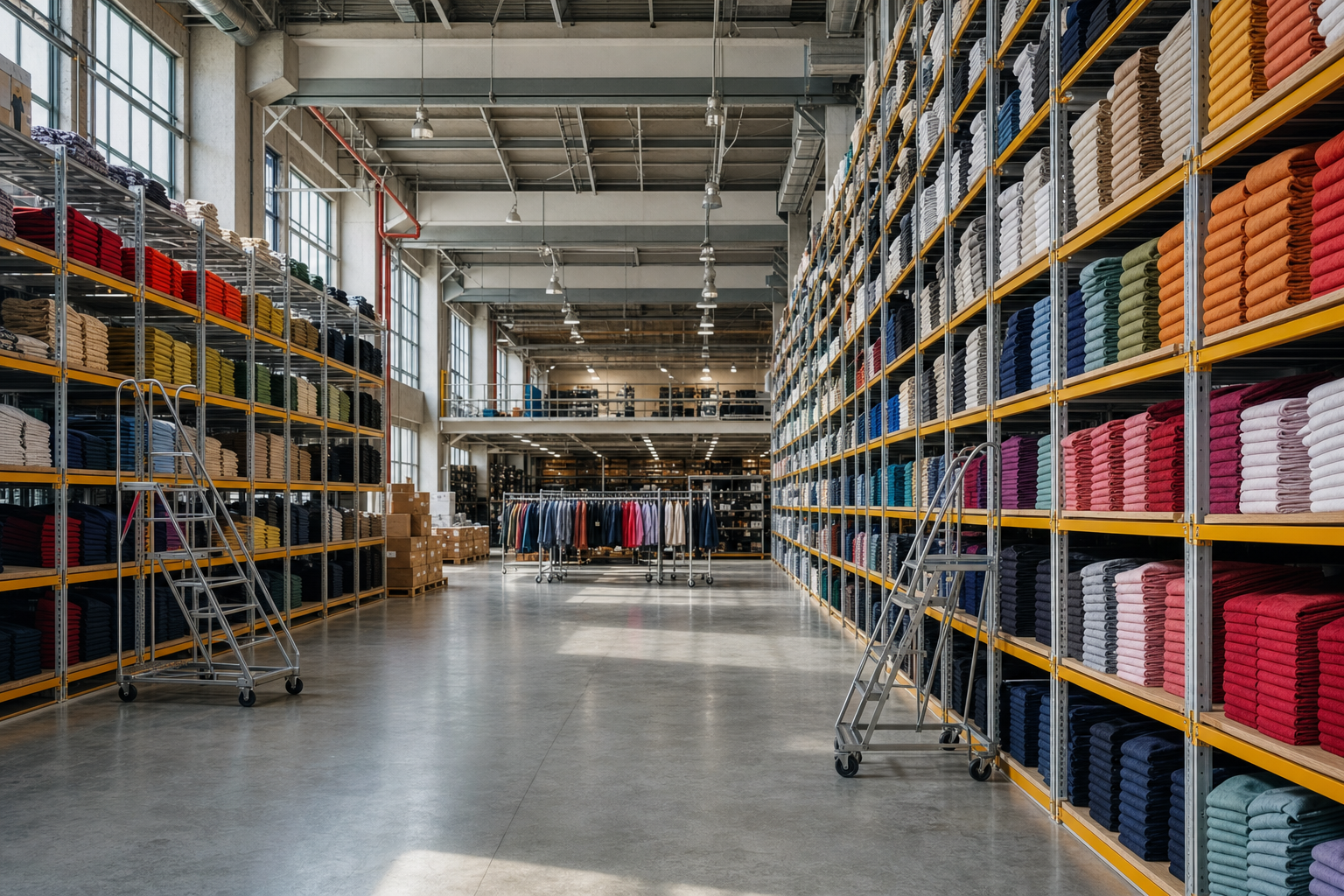
It is Friday at 10:47am Pacific. A brand drops 412 SKUs on Shopify at 11:00am sharp. By 11:04, 1,900 orders are in. The 3PL’s WMS is supposed to pull orders every 15 minutes; it is now pulling every 4 because the queue is backing up. By 1:00pm, the warehouse floor has picked 600 of 1,900, the brand’s CX inbox is taking “where is my order” emails from customers who paid for same-day, and a Nordstrom EDI 856 ASN for a 1,200-unit wholesale shipment, due to transmit by 5:00pm Eastern, is sitting unsent because the 3PL’s integration to the brand’s order system queues ASNs behind DTC waves. The brand will eat a chargeback by Tuesday. None of this is a warehouse problem. It is a 3PL fit problem.
What makes a 3PL the best 3PL for apparel brands in 2026?
The phrase “best 3pl for apparel brands” gets typed into search by founders and ops leaders who have already learned that a generic ecommerce 3PL is not the same thing as an apparel 3PL. The best 3PL for an apparel brand in 2026 is the one whose operational model matches the brand’s channel mix, drop cadence, retailer compliance exposure, and returns profile, and whose systems integrate cleanly with the brand’s order, inventory, and PIM layers so that inventory truth holds across DTC, wholesale, and warehouse simultaneously.
That definition is doing a lot of work. Let me unpack it.
Apparel is not standard ecommerce. The unit of work is a style-color-size, not a SKU in isolation. A single style can have 24 variants. Inventory commitments split across an active wholesale order book, a Shopify ATS pool, and a retailer-allocated reserve. Returns come back as size exchanges as often as refunds, and the inventory has to be inspected, graded, and re-posted to the correct ATS pool, not just receipted. Drops compress a month of fulfillment volume into 72 hours. Retailers like Nordstrom, Saks, Bloomingdale’s, and Revolve enforce shipping windows down to the day, with EDI 856 ASN timing requirements measured in hours. A 3PL that is excellent at shipping supplements or DTC cosmetics will fail at all of this, quietly, until the chargebacks arrive.
Why does picking the wrong 3PL show up as an inventory problem?
In the early years of Uphance, brand after brand described their pain to me as “the 3PL is bad” when the actual failure was upstream. The 3PL was executing on whatever order data it was given. The data was wrong because nothing was reconciling DTC commitments against wholesale-committed pools against actual on-hand. The 3PL got blamed for overselling and short-shipping. The 3PL was the symptom, not the cause.
That sits squarely in Breakpoint 3 (inventory truth) and Breakpoint 5 (warehouse execution) of the 6 Breakpoints of Apparel Operations. The 3PL lives at Breakpoint 5, but a brand that has not solved Breakpoint 3 first will never get clean execution out of any 3PL, no matter how good the warehouse. For a $15M brand running wholesale, DTC, and a 3PL, the typical cost of unresolved Breakpoint 3 is six to nine hours a week spent squaring inventory counts between Shopify, the 3PL’s WMS, and the wholesale order book, plus oversells running between 2 and 3 percent at peak. One FTE ends up spending the whole week piping data between systems.
So before evaluating 3PLs, an honest question: is the brand’s order and inventory layer giving the 3PL a clean, channel-aware ATS, or is the brand sending Shopify’s gross on-hand and hoping for the best? If the answer is the second one, the 3PL choice matters less than the brand thinks.
What are the actual evaluation criteria that separate apparel 3PLs?
After several years of hearing apparel founders and ops leads describe their 3PL relationships to me, I can say the criteria that matter are not the ones on the standard RFP. Square footage, pick rates, and per-unit costs are table stakes. The criteria that predict whether the relationship will work at $15M and not break at $30M are these.
Drop capacity, not steady-state capacity. Ask the 3PL what their largest single-day order volume has been for an apparel client, and what their average pick-to-ship time was during that drop. If they cannot answer in specifics, they have not run a real drop. Magnolia Pearl drops do not behave like a steady DTC business. A 3PL whose model assumes a smooth 600-order-per-day baseline will collapse when the brand hits 4,000 orders in 6 hours.
Same-day ship cutoffs that actually hold. Many 3PLs publish a 12pm or 2pm same-day cutoff and miss it routinely during peak. Ask for the on-time-ship percentage by month for the prior 12 months, not the annual average. The annual average hides Q4.
EDI compliance depth. Not “we do EDI.” Specifically: which retailers’ EDI 850, 856, and 810 documents have they implemented, what is their ASN-to-pick timing, and what is their chargeback rate by retailer. A 3PL that ships to Nordstrom, Saks, and Bloomingdale’s monthly and has a sub-1 percent chargeback rate is rare and worth a premium. If retailer chargebacks at the brand exceed 1 percent of wholesale revenue, the EDI integration between the order system and the 3PL is the problem, not the warehouse staff.
Returns processing SLA in days, not weeks. Returns need to hit sellable inventory within days, not weeks. A 3PL that takes 10 to 14 business days to inspect, grade, and re-post a return is effectively removing that inventory from the sellable pool for half a month. On a $15M brand with a 25 percent DTC return rate, that is real money sitting in a tote.
International duties and DDP handling for cross-border DTC. If the brand ships internationally, the 3PL needs to handle DDP correctly, calculate duties at checkout via the order system, and file commercial invoices that match. Lufema runs multi-entity wholesale across borders; the duty and HS code handling at the 3PL has to match what the order system computed, or customs holds the shipment and the customer blames the brand.
Integration to the brand’s order and inventory system, not just Shopify. This is the one most brands underweight. A 3PL that only integrates to Shopify can ship DTC fine but cannot see wholesale orders, cannot post receipts against POs, and cannot reconcile against the brand’s order book. The brand ends up with a 3PL inventory number and a separate brand inventory number, and a person whose job is to make them match on Tuesday mornings.
Should an apparel brand use one 3PL or split DTC and wholesale?
The instinct is to use one 3PL for everything because the inventory pool is shared. The instinct is usually right, but with a caveat.
If the wholesale business is over roughly 40 percent of revenue and ships to major department stores with strict EDI compliance, splitting wholesale to a 3PL that specializes in retail compliance and keeping DTC at a 3PL optimized for ecommerce velocity is sometimes the right call. The cost is inventory transfer between the two facilities and a harder reconciliation job. The benefit is that the wholesale 3PL is not getting pulled off ASN duty to process a Friday drop.
For most $5M to $20M brands, one 3PL is correct. The reconciliation cost of split facilities is higher than the operational benefit. The decision shifts above $30M, and above $50M most brands end up with at least two warehouses, often one east and one west, and frequently one for wholesale and one for DTC. The architectural fix is not the 3PL choice. It is making sure the brand’s order and inventory system can run a channel-aware ATS across multiple facilities so that a Shopify customer in Brooklyn pulls from the east 3PL and the wholesale ASN for Nordstrom pulls from the wholesale 3PL, automatically.
What are the operational anti-patterns to watch for?
A few patterns show up over and over and are worth naming directly.
The first is the 3PL that quotes a per-unit pick rate that looks competitive but bills heavily on receiving, kitting, returns, and special projects. The annualized invoice ends up 40 percent higher than the rate card suggested. Ask for a sample invoice from a comparable apparel client, with names redacted.
The second is the 3PL that runs on a WMS the brand has never heard of, with a custom integration to Shopify that was built by one person and is not documented. When that person leaves the 3PL, the integration breaks and nobody at the 3PL can fix it. Prefer a 3PL on a known WMS (Extensiv, ShipHero, Logiwa, Manhattan SCALE, Körber) with a documented integration to the brand’s order system.
The third is the 3PL that has never handled a true drop and is convinced their existing operation will scale. The brand’s first drop teaches them otherwise, and by then the next drop is already on the calendar.
The fourth is the 3PL that treats returns as an afterthought. Returns processing for apparel is a real operation. Garments have to be inspected for wear, smell, damage, and missing tags, graded into A-stock, B-stock, or disposal, and re-posted to the correct sellable pool with the correct location. A 3PL that does not have a dedicated returns line is going to be slow, and slow returns are dead inventory.
The fifth is the brand that picks a 3PL on price and then tries to compensate with internal headcount. The hidden cost is the FTE who spends their week on data plumbing instead of forecasting, allocation, or vendor management. That is the cost of a cheap 3PL, and it does not show up on the 3PL’s invoice.
How does the order and inventory system change the 3PL evaluation?
This is where category positioning matters. A point solution like a standalone WMS or a standalone OMS will give the 3PL clean data on one channel and leave the rest scattered. A generic ERP will give the 3PL a single source of truth that does not understand drops, ASN timing, or channel-aware ATS. The unified apparel operations platform sits between those two, running product data, production, inventory, orders, warehouse execution, payments, and reporting in one connected system so that the 3PL gets exactly the order stream and inventory commitments it needs, and the brand gets reconciliation built in.
When the order and inventory layer is solved, the 3PL evaluation becomes a real evaluation. The brand can compare two 3PLs on actual operational fit, not on which one has a less broken Shopify integration. The 3PL stops being the place where breakdowns surface and becomes what it should be, a warehouse partner executing against a clean plan.
What is the short list of 3PLs apparel brands actually use in 2026?
Deliberately, this post does not rank specific 3PLs. The reason is that the right answer depends on the brand’s drop pattern, retailer mix, return rate, international exposure, and the state of the upstream order and inventory layer. A 3PL that is excellent for a $10M DTC streetwear brand doing monthly drops is wrong for a $40M contemporary brand shipping 60 percent wholesale to department stores.
What is consistent is the shape of the evaluation. Brands should ask for: drop volume history, on-time-ship by month, chargeback rate by retailer, returns processing days, sample invoices, integration architecture and documentation, and references from two apparel brands of similar size and channel mix. Brands that run that evaluation end up with a short list of three or four 3PLs that genuinely fit. Brands that skip it end up at the cheapest pick rate and then in a Friday afternoon scene like the one at the top of this post.
The 3PL is only as good as the data you feed it
The 3PL decision is downstream of the order and inventory architecture. Fix Breakpoint 3 first, then evaluate 3PLs against a real workflow, then pick the partner whose operational model matches the brand’s drop cadence, retailer compliance exposure, and returns profile. The 3PL is not the bottleneck if the brand is sending it clean, channel-aware order and inventory data.
For an ops leader at a $5M to $50M apparel brand, the practical sequence is this. Audit current inventory reconciliation hours and oversell rate. Walk through the 6 Breakpoints framework and locate where the actual failures live. Resolve the order and inventory layer so the 3PL has clean inputs. Then run the 3PL evaluation against the criteria above, not against rate cards.
The brands that do this in that order end up with 3PL relationships that hold through drops, peaks, and growth from $15M to $40M without rebuilding. The brands that pick the 3PL first end up changing 3PLs every 18 months and never figuring out why the chargebacks keep coming.
Frequently asked questions
Where this fits in the Uphance platform
Venkat is the Founder and CEO of Uphance and the author of the 6 Breakpoints of Apparel Operations framework. He writes about operational clarity for apparel brands as complexity grows across channels, warehouses, partners, and teams. His work focuses on why disconnected operations, not growth itself, create the chaos most mid-market brands feel between $5M and $100M in revenue, and on the operating-model patterns that decide whether scaling a brand strengthens execution or fractures it. He argues that the status quo is the real competitor in apparel software, and that the right move is fewer systems with deeper connection, not more dashboards.
Shubham writes about evaluating ERP fit, assessing operational complexity, and how apparel brands can tell whether their current systems are helping or holding them back. As a Solutions Consultant at Uphance, he runs discovery conversations and fit assessments for apparel brands moving off patchwork stacks of PLM, PIM, inventory, and B2B tools. His articles cover ERP selection, vendor RFPs, comparison frameworks, and the operational signals that tell a brand it has outgrown spreadsheets and point solutions. He focuses on how mid-market apparel teams evaluate connected platforms against the cost of staying with what they have.