


Warehouse Bin System Management: A Guide
An efficient warehouse bin system is crucial for smooth warehouse operations.
Smooth warehouse operations depend on more than just having enough space. How that space is organized, tracked, and managed determines how quickly orders are fulfilled, how accurate inventory records are, and how easy you can scale your business.
To this end, the importance of creating and managing storage bin systems cannot be overemphasized. This guide explores warehouse bin storage and management in detail, from core concepts and strategies to best practices.
What Is Warehouse Bin Storage?
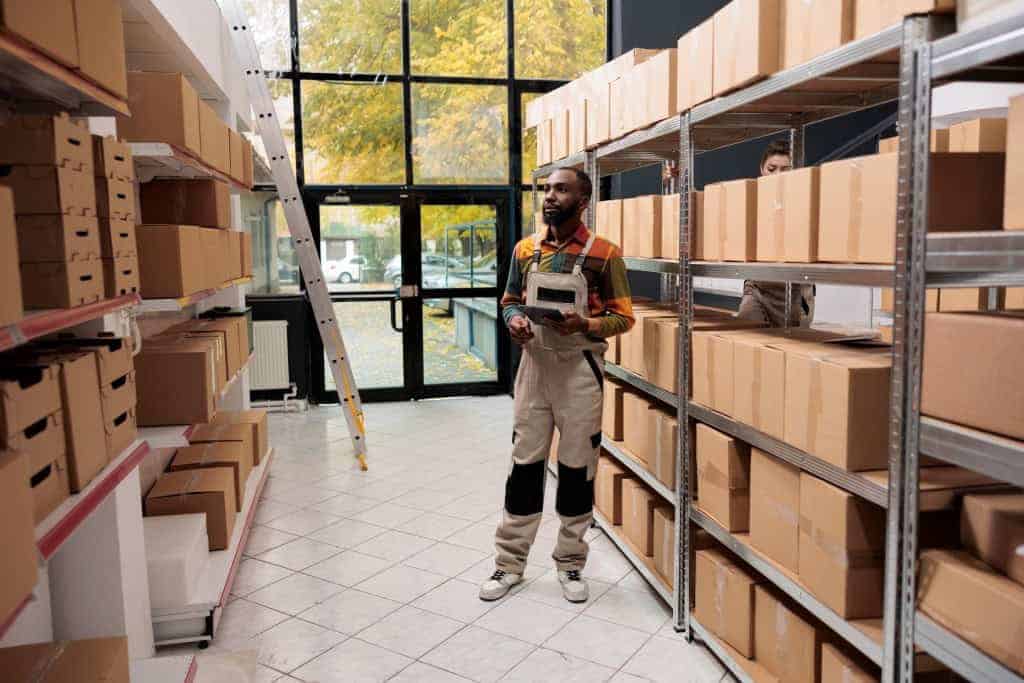
Warehouse bin storage refers to the practice of organizing inventory into specific, identifiable storage locations, known as bins. A bin can be a shelf, rack, drawer, pallet position, or container used to hold one or more SKUs.
Each bin is assigned a unique location code, allowing warehouse staff and systems to know exactly where items are stored. Instead of simply knowing that inventory is “in the warehouse,” bin storage answers a much more precise question, which is “Where exactly is this item located right now?”
Benefits of Effective Warehouse Bin Storage and Management
When done right, implementing warehouse bin storage delivers benefits across speed, accuracy, space utilization, and scalability. Let’s look at these benefits a bit more closely.
1. Faster Picking and Order Fulfillment
One of the most immediate benefits of effective bin management is speed. When every item has a clearly defined bin location, warehouse staff no longer waste time searching for inventory.
With accurate bin data:
- Pickers are guided directly to the correct location
- Travel time within the warehouse is reduced
- Orders move from pick to pack more quickly
This improved efficiency is especially valuable during peak seasons when order volumes surge and fulfillment speed becomes a competitive advantage.
2. Improved Inventory Accuracy
Inventory accuracy is one of the biggest challenges in warehouse management. Poor bin control often leads to discrepancies between physical stock and system records.
Effective bin storage:
- Tracks inventory at the bin level, not just the warehouse level
- Records every movement between bins in real time
- Reduces reliance on memory or manual notes
Higher accuracy means fewer surprises, better planning, and greater confidence in inventory data across purchasing, sales, and operations teams.
3. Reduced Picking and Shipping Errors
Shipping the wrong product, size, or quantity is costly. Returns, re-shipments, and customer dissatisfaction quickly eat into margins.
Bin management reduces errors by:
- Ensuring SKUs are stored in clearly identified bins
- Supporting barcode scanning at pick and put-away
- Separating similar items into distinct locations
By minimizing human error, businesses protect both their reputation and profitability.
4. Better Space Utilization
Warehouse space is expensive. Without bin-level visibility, space is often underutilized or poorly organized.
Effective bin storage helps:
- Identify empty or underused bins
- Allocate space dynamically based on inventory levels
- Prevent overfilled or congested storage areas
Optimized space utilization allows warehouses to handle higher volumes without immediate expansion, saving on operational costs.
5. Easier and More Accurate Cycle Counting
Full physical inventory counts are disruptive and time-consuming. Bin management enables cycle counting, where small sections of the warehouse are counted regularly.
Benefits include:
- Continuous inventory validation
- Faster identification of discrepancies
- Minimal disruption to daily operations
Regular cycle counts improve long-term accuracy and reduce the need for warehouse shutdowns.
6. Improved Warehouse Visibility and Control
Effective bin management provides real-time visibility into:
- Where each SKU is located
- How much inventory is in each bin
- Which bins require replenishment
This level of control allows managers to make faster, better-informed decisions and respond quickly to issues such as stock shortages or bottlenecks.
7. Support for Scalable Growth
As businesses grow, warehouse complexity increases. New SKUs, higher order volumes, and more staff can overwhelm informal storage systems.
Bin storage enables scalability by:
- Supporting higher SKU counts without confusion
- Standardizing processes for new warehouse staff
- Allowing warehouses to expand without losing control
A well-designed bin system grows with the business instead of becoming a limitation.
8. Better Labor Efficiency and Productivity
Clear bin locations and guided workflows reduce the cognitive load on warehouse workers.
This leads to:
- Shorter training times for new employees
- More consistent performance across shifts
- Reduced dependency on gut feelings
Productive teams can handle more volume without burnout, improving overall warehouse performance.
Key Components of Bin Management
Effective bin management goes beyond labeling shelves. It involves multiple interconnected elements that ensure inventory flows smoothly through the warehouse. These elements include:
- Bin location structure
- SKU-to-Bin assignment
- Capacity and dimensions
- Lot, batch, and serial tracking
Bin Location Structure
Bins are usually organized hierarchically, such as:
- Warehouse
- Zone
- Aisle
- Rack
- Shelf
- Bin
This structure makes it easier to navigate the warehouse and standardize processes.
SKU-to-Bin Assignment
Each SKU is assigned to one or more bins. In some cases, high-volume SKUs may occupy multiple bins across different zones to reduce picking congestion.
Capacity and Dimensions
Bins have defined size and weight limits. Proper capacity management prevents overfilled bins, damaged inventory, and safety hazards.
Lot, Batch, and Serial Tracking
For businesses that require traceability, bins can store inventory by lot number, batch, or serial number. This is especially important for regulated industries or businesses handling returns and recalls.
Types of Bin Storage Strategies
There is no one-size-fits-all approach to bin storage. The right strategy depends on order volume, SKU count, and warehouse layout. Here are the common types of warehouse bin storage systems worth considering.
Fixed Bin Locations
Also known as static shelving, this arrangement requires assigning each SKU to a specific bin permanently. This type of bin system is best suited for stable inventory with low SKU variation, as it’s easy to understand and manage.
On the flip side, it can lead to wasted space if stock levels fluctuate.
Dynamic Storage Bin
In dynamic bin storage, stock is placed in any available bin based on clearly defined system rules. By doing so, storage space is maximally utilised, especially for fulfillment centers with high inventory volumes. This system can only work if there’s a warehouse management system in place.
Zone-Based Bin Storage
As the name implies, the warehouse is divided into zones, with certain products stored in the appropriate bin. It combines fixed and dynamic storage to reduce travel time for pickers and improve labor efficiency.
Best Practices for Warehouse Bin Storage and Management
Warehouses that follow proven bin management best practices are able to move faster, reduce errors, and scale with confidence.
What are these best practices?
1. Use a Warehouse Management System
Managing your warehouse operations with spreadsheets or legacy systems is the perfect recipe for disaster. This is why smart businesses use a WMS.
For starters, these systems are capable of automatically generating bin labels based on the rules you set. Furthermore, a WMS allows you to optimize your warehouse layout to maximize space and reduce travel time. And a well-organized warehouse is crucial for a smooth supply chain.
Another upside to using a WMS is that it makes creating and tracking bin transfers a breeze.
2. Use Consistent Bin Naming and Labeling Conventions
Consistency is key when it comes to bin identification. Every bin should have a unique, standardized code that clearly indicates its position.
This can be achieved by:
- Using a uniform naming format across the warehouse
- Avoiding ambiguous or duplicate bin codes
- Placing labels at eye level where possible
- Including barcodes or QR codes for scanning
Clear labeling reduces picking errors and speeds up training for new warehouse staff.
3. Define Bin Capacity and Storage Rules
Each bin should have defined capacity limits based on physical dimensions, storage conditions, weight restrictions, etc.
Establishing bin capacity rules prevents overfilled bins, damaged goods, and unsafe working conditions. Storage rules also help warehouse systems recommend appropriate bins during receiving and replenishment.
4. Implement Barcode Scanning at Every Bin Movement
Manual inventory updates are one of the biggest causes of bin inaccuracy. Scanning should be mandatory at every inventory movement.
By every inventory movement, we mean receiving and putting away stock, picking and packing orders, bin transfers, return check-ins, etc.
5. Separate Pick Bins from Storage and Reserve Bins
High-volume SKUs should be stored in dedicated pick bins, with reserve bins used for overflow inventory.
Benefits of this approach include:
- Faster picking for popular items
- Easier replenishment planning
- Reduced congestion in picking areas
- Better customer satisfaction
This separation is especially useful in warehouses handling large order volumes or seasonal demand spikes.
Manage Your Warehouse Bins Efficiently With Uphance WMS
Managing warehouse storage bins gets a whole lot easier when you use the Uphance WMS. From seamless bin transfers with barcode scanners to stress-free putaways to easy warehouse layout optimization, Uphance was uniquely designed to make your warehouse operations a breeze.
Curious to know if Uphance is a good fit for your business and see it in action? Contact us right away!


